
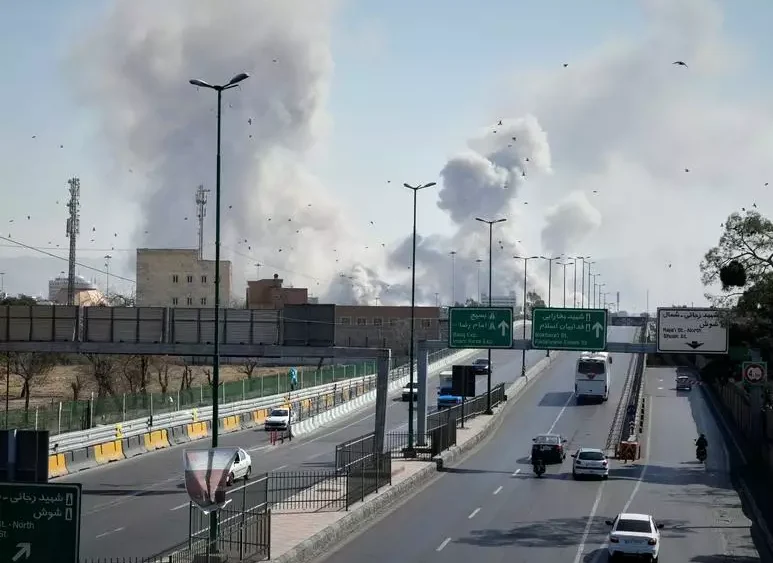
TEHRAN — The bombing of Tehran intensified on Thursday as the Iran-Israel war entered its sixth day, with residents reporting heavier air strikes across parts of the Iranian capital while regional tensions widened following a U.S. attack on an Iranian naval vessel.
Witnesses in Tehran said explosions were heard in several areas, including the northern districts of the city, as Israeli forces carried out what officials described as a new wave of strikes targeting Iranian government and military infrastructure.
Residents described worsening conditions as the air campaign continued. One Tehran resident said the bombardment appeared more intense than earlier days of the conflict, with repeated explosions heard across the city.
The escalation comes amid broader regional developments. Iranian officials said more than 80 sailors were killed when a U.S. torpedo strike hit an Iranian warship off the coast of Sri Lanka. Iran’s foreign minister warned that Washington would “bitterly regret” the attack, describing it as a strike carried out in international waters without warning.
A senior commander in Iran’s Revolutionary Guards said Iranian forces were prepared to respond to U.S. actions. Officials indicated that retaliation could target American interests beyond the immediate conflict zone.
Leadership uncertainty after Khamenei’s death
The conflict has also created political uncertainty inside Iran following the reported killing of Supreme Leader Ayatollah Ali Khamenei during the opening phase of the U.S.-Israeli air campaign.
Iranian authorities had planned three days of national mourning, with Khamenei’s body expected to lie in state in Tehran. However, the memorial ceremony was abruptly postponed shortly before it was due to begin.
Officials did not publicly explain the decision. A source familiar with the situation said the delay was partly due to security concerns, including fears that gatherings of mourners could become targets while Israeli and U.S. aircraft remain active in Iranian airspace.
Iranian authorities had also indicated that discussions were underway to name a successor. Reports suggested that Mojtaba Khamenei, the late leader’s son, was among the leading candidates.
Regional conflict and military objectives
Israeli officials have said their operations aim to weaken Iran’s military capabilities and leadership structure. Sources familiar with Israeli planning said the campaign may enter a second phase targeting underground facilities believed to house Iran’s missile stockpiles.
The United States has stated that its objective is to limit Iran’s ability to project military power beyond its borders.
The conflict has also had wider economic implications. Energy markets have been affected as disruptions to the Strait of Hormuz and regional supply routes have temporarily cut off roughly one-fifth of global oil and liquefied natural gas supplies.
Meanwhile, air raid sirens in Israel continued to send residents to shelters. Israeli military spokesman Effie Defrin said the number of missile launches from Iran had decreased compared with earlier days of the conflict, though he cautioned that the threat remained.



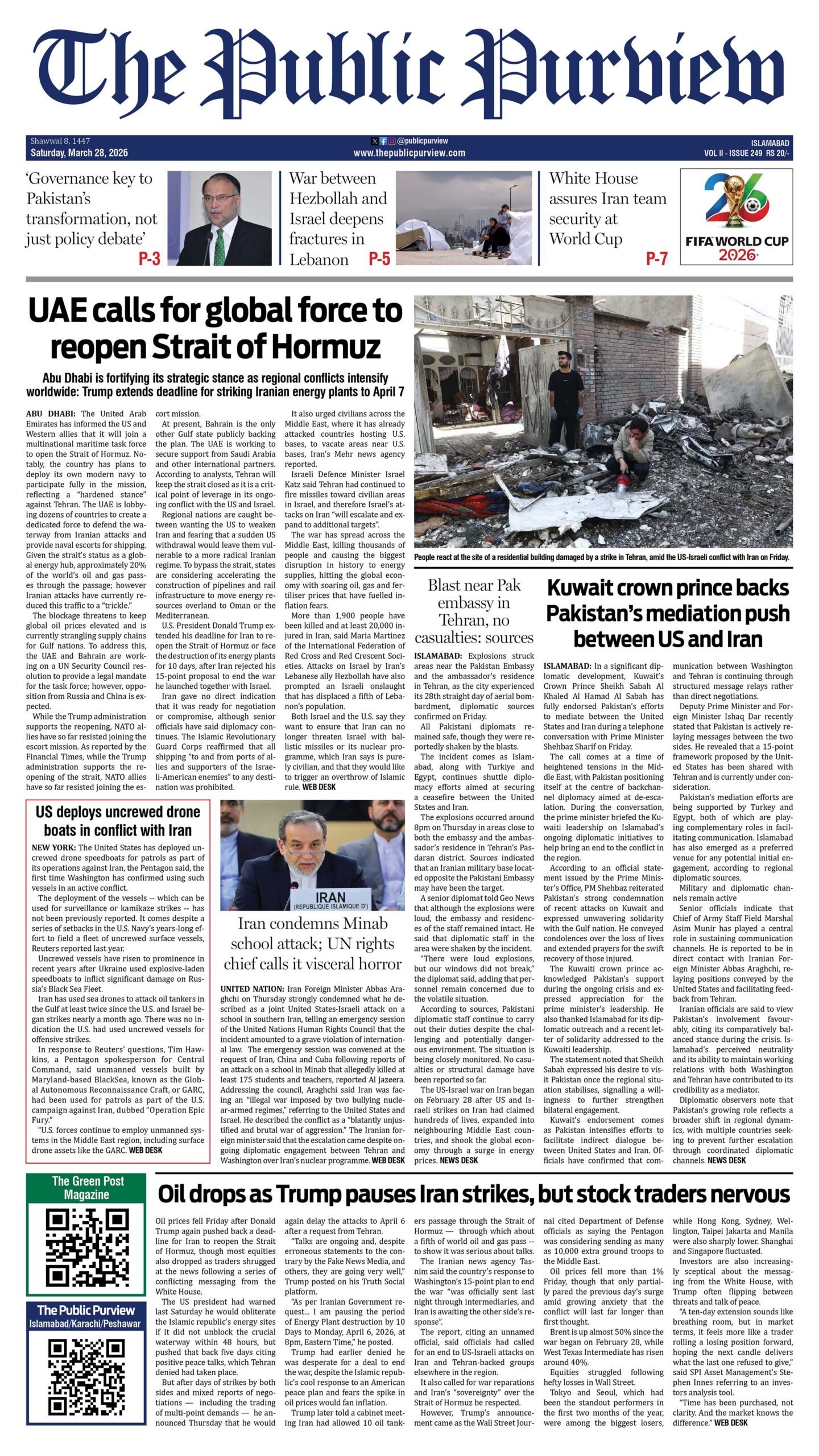 Today's E-Paper