
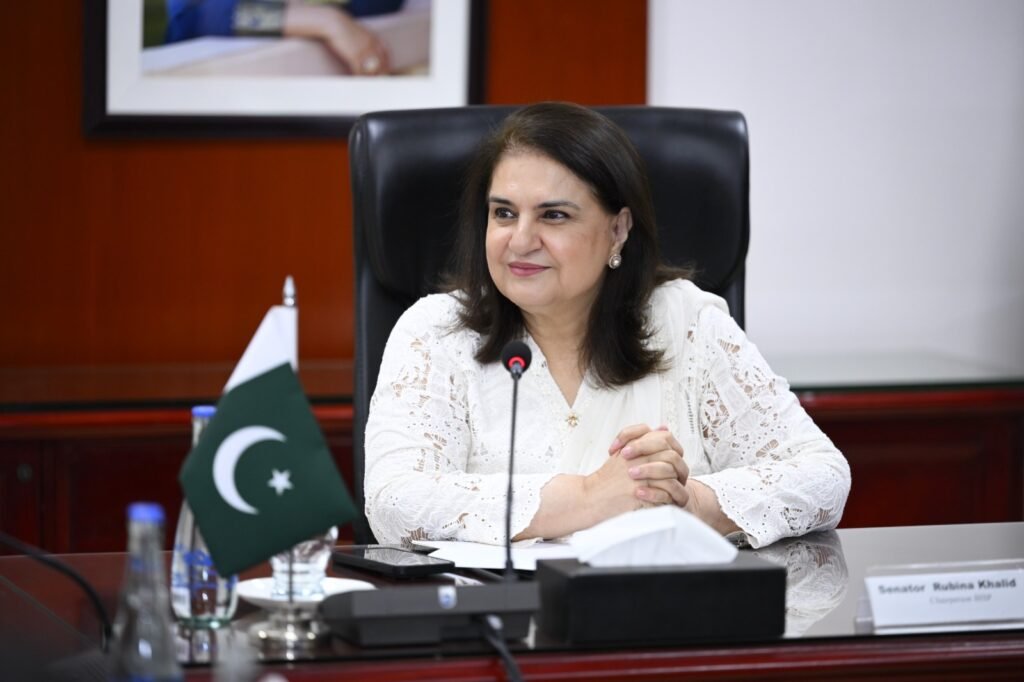
Benazir Income Support Programme (BISP) Chairperson Senator Rubina Khalid will visit Tharparkar and Badin on November 8 and 9 to review social protection initiatives and meet women beneficiaries and their families.
During the two-day visit, Khalid will travel to Mithi and other areas of the two districts, where she will meet deserving families, listen to their complaints and assess the implementation of various BISP programmes.
Tharparkar, one of Pakistan’s districts severely affected by drought, remains a major focus of BISP’s social protection efforts. The programme provides financial assistance and other support to vulnerable households to help address their economic and social challenges.
BISP Coverage in Tharparkar
According to programme figures, 126,044 women are registered under the Benazir Kafaalat Programme in Tharparkar, while 123,320 have been issued SIMs, representing 97.84 per cent coverage.
Under the Benazir Nashonuma Programme, 43,091 beneficiaries are receiving support, including 23,044 pregnant women and 20,047 children.
The Benazir Taleemi Wazaif Programme has registered 168,776 children from beneficiary families across 4,499 schools in the district.
Skills Training and Registration Initiatives
To improve employment opportunities for young people, 48 individuals from Tharparkar are receiving training through a batch of the Benazir Hunarmand Programme in collaboration with the BBSHRRDB.
The district also recorded 4,281 surveys under the National Socio-Economic Registry (NSER) in October 2026. A Mobile Registration Van has been allocated to help families in remote areas register for BISP assistance.
Focus on Direct Engagement With Beneficiaries
The chairperson’s visit aims to strengthen social protection services in remote and underserved communities by identifying beneficiaries’ concerns and reviewing the delivery of financial assistance, education support, nutrition services and skills development opportunities.
Through direct interaction with beneficiary families, BISP intends to assess programme implementation and identify areas where further improvements are needed.