
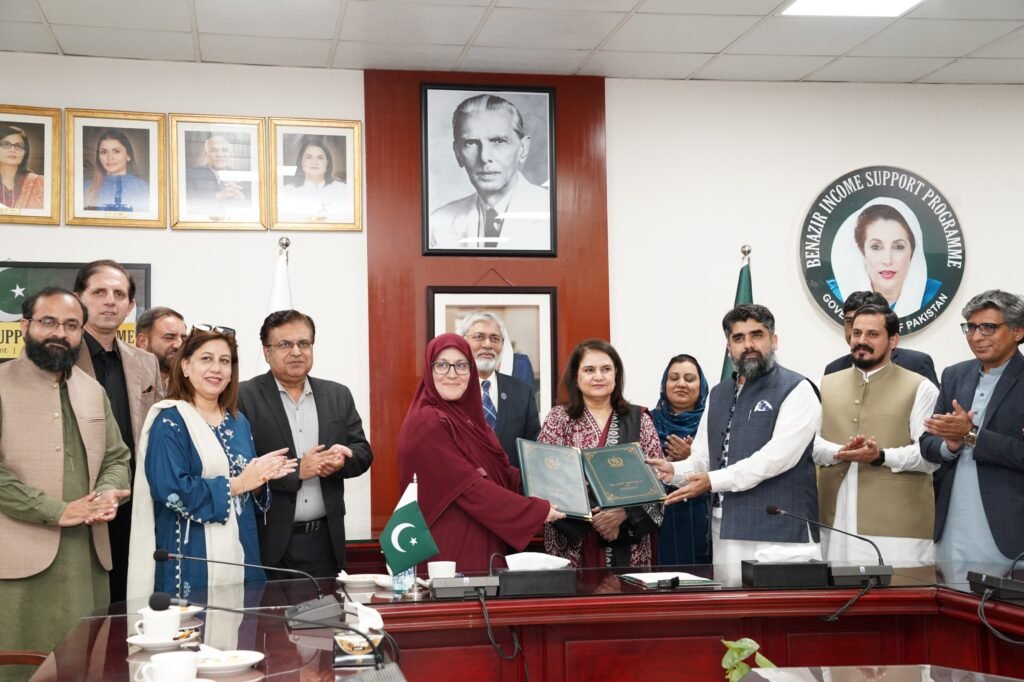
ISLAMABAD, November 6, 2026: The Benazir Income Support Programme (BISP) Board has approved a pilot residential skills development programme in collaboration with the Pak-Austria Fachhochschule: Institute of Applied Sciences and Technology (PAF-IAST), Haripur, to equip beneficiaries with market-oriented professional skills and improve their employment prospects.
According to a BISP press release issued on Friday, the initiative will provide residential training to 300 beneficiaries from across Pakistan through an internationally aligned training model aimed at creating sustainable livelihood opportunities.
The programme will focus on three priority areas: hospitality management and tourism services, healthcare services and caregiving, and information technology and digital skills.
At least 50 percent of the training places will be reserved for women to encourage their participation in economic activities and improve access to employment opportunities.
Training to focus on employment and industry needs
The programme will combine technical training with practical career development support, including employer engagement, career counselling, workplace orientation and industry exposure.
Participants will also have opportunities to obtain internationally recognised certifications in selected sectors, helping strengthen their competitiveness in domestic and international labour markets.
BISP said the training model has been designed to address industry requirements while enabling beneficiaries to develop professional skills relevant to emerging employment opportunities.
The residential arrangement will bring together participants from different parts of the country, providing structured training and exposure to professional working environments.
Pilot to assess expansion potential
The initiative will initially operate as a pilot project to evaluate the effectiveness of the residential skills training model and determine whether it can be expanded to benefit more households.
According to BISP, the programme forms part of its efforts to complement conventional financial assistance with skills development, employment opportunities and long-term economic empowerment.
The organisation said investing in human capital and demand-driven training could help beneficiary households improve their incomes and move towards greater economic self-reliance.
The collaboration with PAF-IAST is intended to create pathways to professional employment while strengthening the connection between social protection, technical education and sustainable livelihoods.