
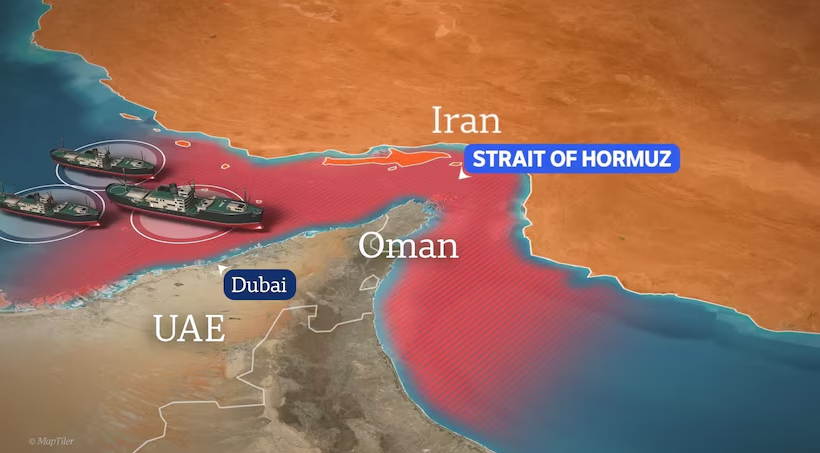
A significant share of Asia’s oil supply travels through the Strait of Hormuz, making the narrow waterway a critical energy corridor for major economies across the continent.
Data compiled by Visual Capitalist shows that roughly 20% of global oil consumption passes through the Strait of Hormuz, which connects the Persian Gulf with the Gulf of Oman and the Arabian Sea. The route serves as the main export channel for oil produced by Gulf countries and a key supply line for Asian energy markets.
China is the largest importer of oil shipped through the strait, accounting for about 37.7% of the total volume. India ranks second with roughly 13.1%, followed by South Korea at around 9.7% and Japan at approximately 8.6%.
Together, these four Asian economies represent the largest share of demand for oil transported through the passage, highlighting the region’s dependence on Gulf energy supplies to support industrial production, transportation and economic growth.
On the export side, Saudi Arabia contributes the largest share of oil shipments passing through the strait at about 37.2%. Iraq follows with 16.8%, while the United Arab Emirates accounts for roughly 15.4%.
Kuwait exports about 11% of the oil moving through the route, while Iran contributes around 10%. Qatar accounts for about 5.8% of shipments, with smaller volumes coming from other producers in the region.
Because of its location between Iran and Oman, the Strait of Hormuz is widely regarded as one of the world’s most strategically important maritime chokepoints. Any disruption to shipping in the area could affect global oil supplies and trigger volatility in energy markets.
Also Read: Saudi Arabia assures support to Pakistan on energy supply amid Strait of Hormuz concerns
For Pakistan, the route is also strategically significant. A large portion of the country’s crude oil and petroleum imports originates from Gulf producers and is transported through the same corridor before reaching South Asian ports, making regional stability in the strait closely tied to Pakistan’s energy security.




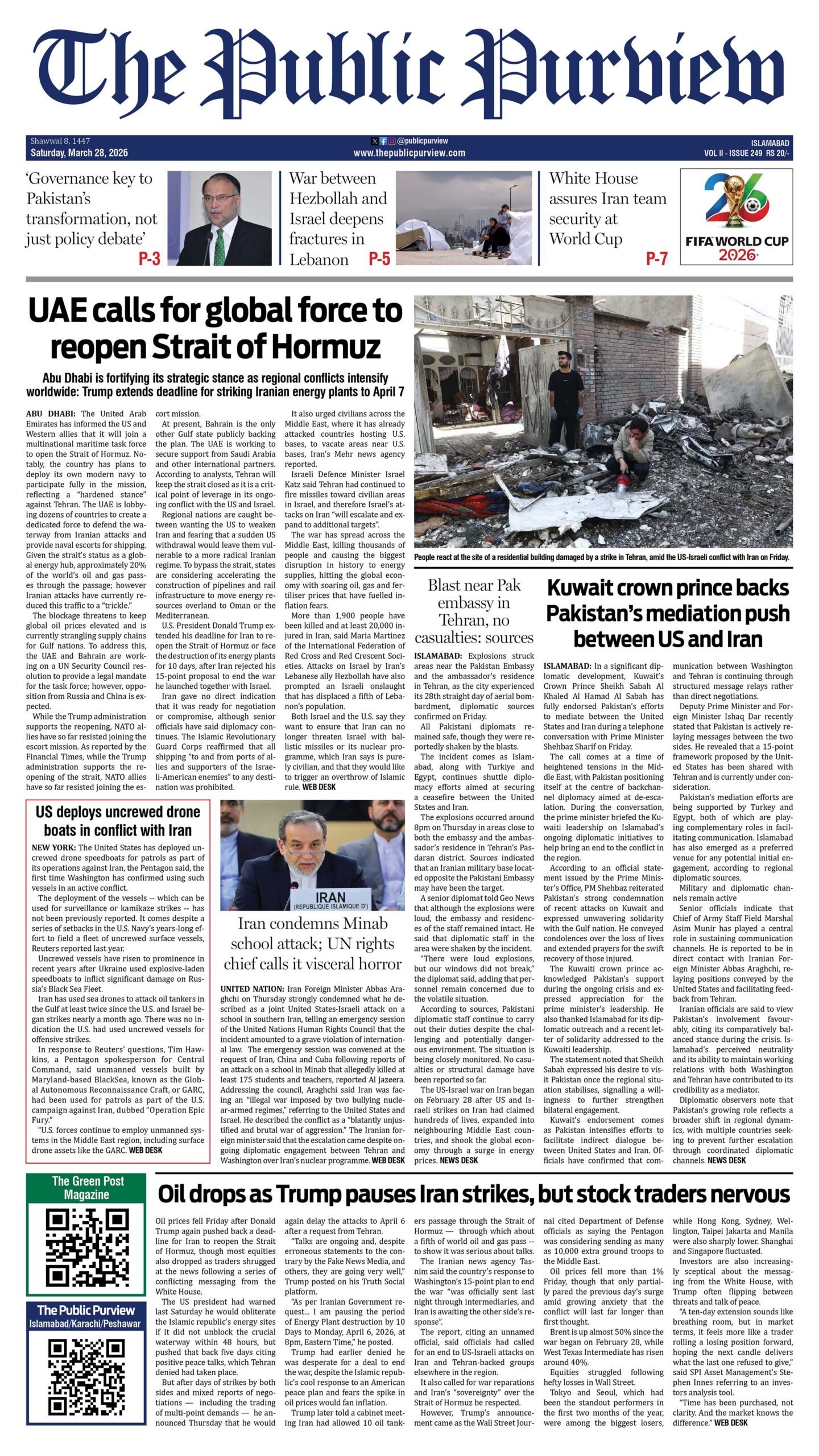 Today's E-Paper