
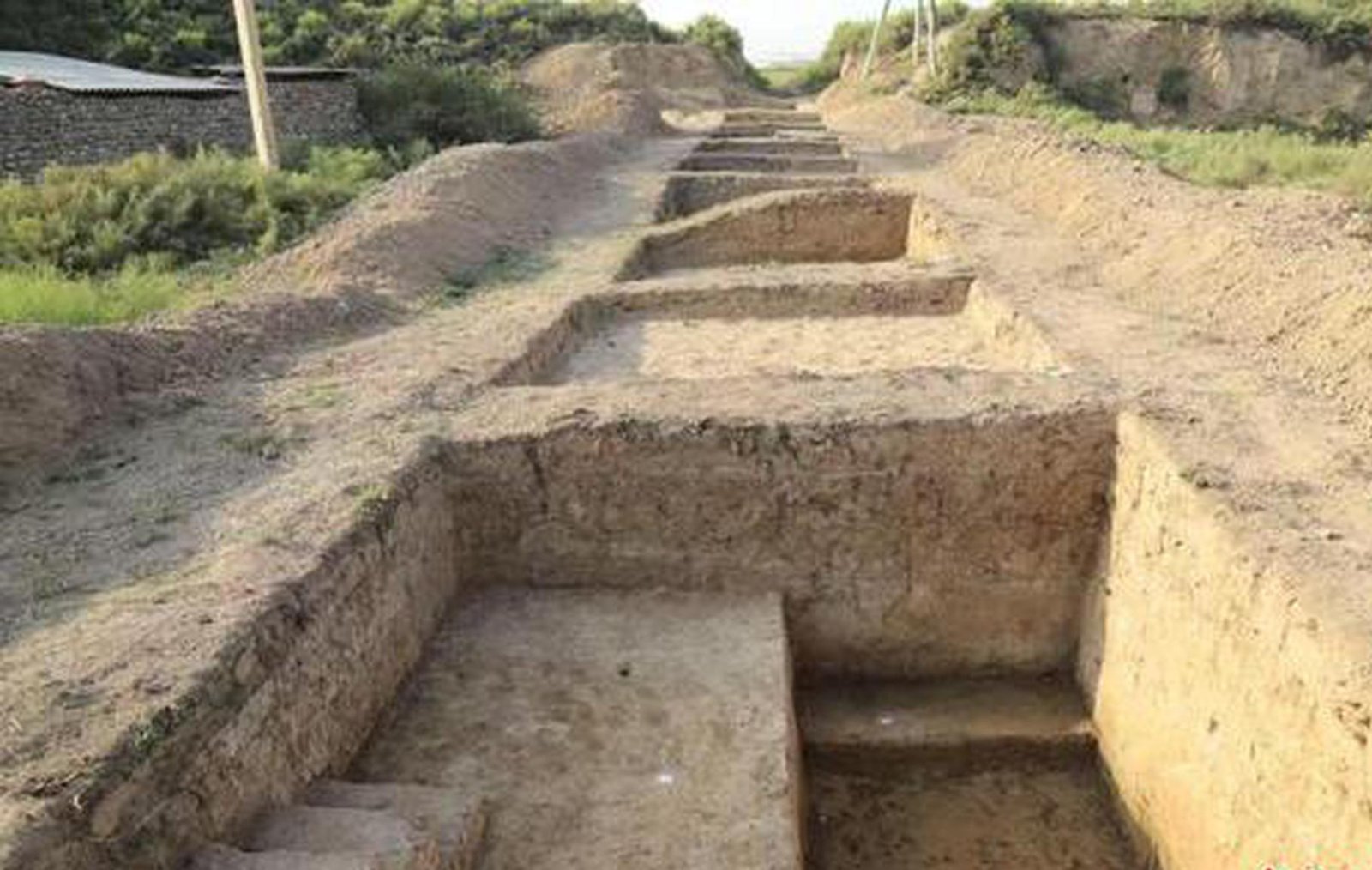
ZHENGZHOU: A joint team of Chinese and Uzbek archaeologists has uncovered early city walls at the ancient city of Kuva in eastern Uzbekistan, dating from the 3rd century BC to the 10th century AD, offering new insights into the long-term development of a key Silk Road settlement.
The discovery was made at the Kuva archaeological site in the Fergana Valley, which once served as an important hub along the ancient Silk Road. Researchers say the findings highlight Kuva’s continuous occupation and strategic importance over more than a millennium.
Kuva, which now covers about 110,000 square meters, is believed to have been part of the ancient state of Dayuan, recorded by Chinese envoy Zhang Qian during the Han Dynasty (202 BC–220 AD). The site’s historical links with China date back more than 2,000 years.
The excavation is being carried out by a joint team from the Luoyang Institute of Archaeology and Fergana State University, which has been conducting fieldwork at the site since 2023.
Walls show centuries of modification
Liu Bin, head of the Chinese archaeological team, said remains of a palace, city gates, defensive walls, residential foundations, streets, and workshops have been identified. Excavations in 2025 focused on the city’s northern gate and the adjacent moat.
According to the team, the city walls underwent multiple modifications in layout and function, constructed using adobe and mud bricks. This evidence confirms that the walls were in continuous use from around the 3rd century BC through the 10th century AD.
Researchers said the long-term use and repeated rebuilding of the walls reflect the city’s resilience, adaptability, and complex urban functions as a major Silk Road center. The evolving construction techniques also provide important material for studying architectural practices and cultural influences across different historical periods.
Palace area offers clues to city layout
The team has also completed a systematic survey of the eastern section of the palace complex, uncovering wall foundation trenches and a surrounding moat. These findings are expected to help reconstruct the overall layout of the ancient city.
Liu said further excavations are planned in the palace area this year to clarify the city’s full layout and functional zones, as research at the Kuva site continues to shed light on the history of Silk Road urban centers in Central Asia.


 Today's E-Paper