
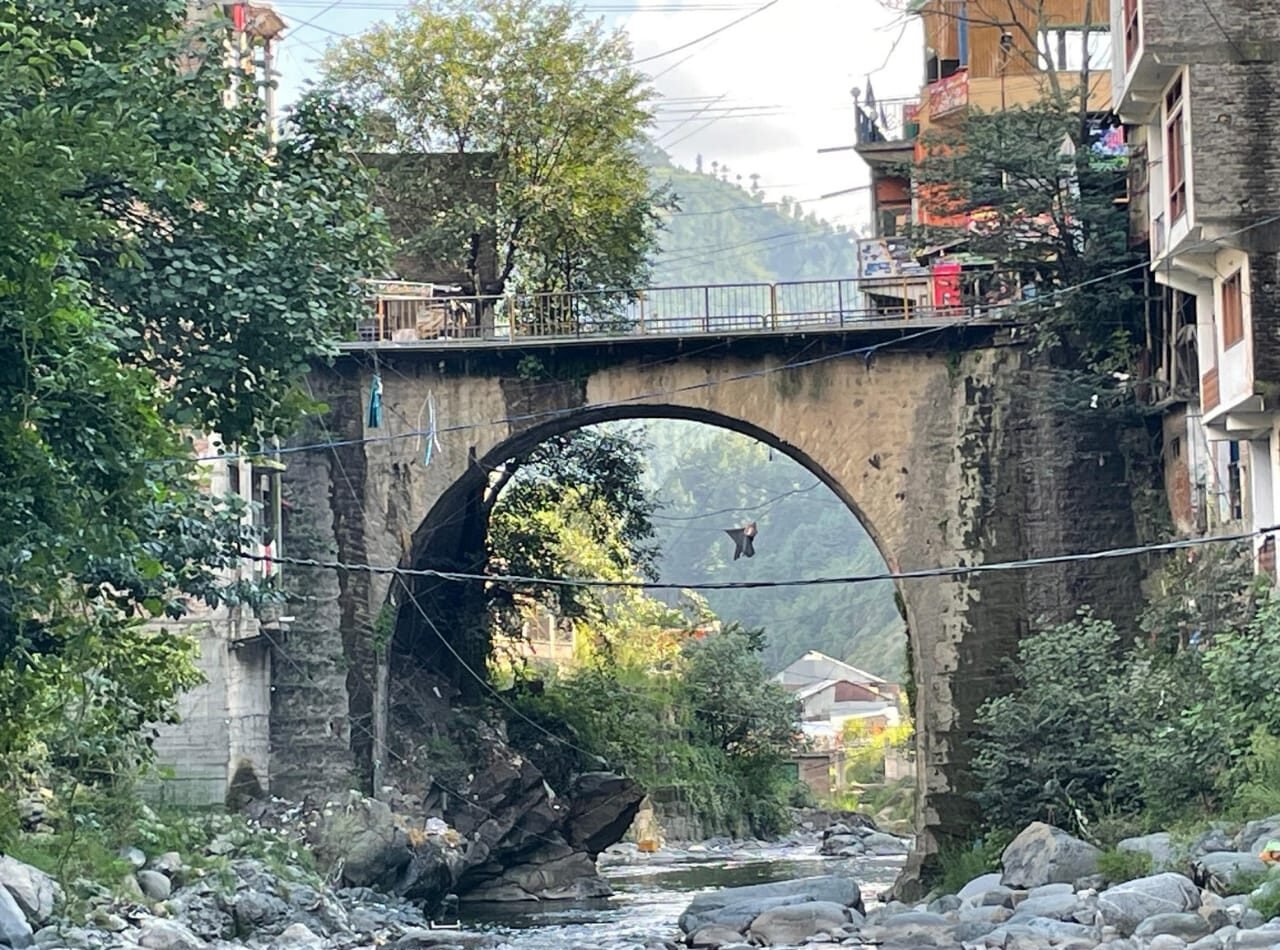
SHANGLA: A decades-old bridge in Alpurai, the headquarters of Shangla district, has deteriorated to a dangerous condition, raising serious safety concerns for thousands of daily commuters and transporters who rely on it as the main route linking Shangla with Kohistan and Gilgit-Baltistan.
The bridge, constructed in the 1970s during the era of the former State of Swat, was originally designed to carry limited traffic. Today, officials and local residents say it is structurally weak, riddled with deep potholes, and showing exposed steel reinforcements, making it increasingly unsafe for heavy and passenger vehicles alike.
Key link for multiple regions
The bridge serves as the primary crossing point for traffic from Shangla district as well as Lower and Upper Kohistan and Gilgit-Baltistan. Thousands of vehicles, including buses, goods carriers, oil tankers and private cars, pass over it daily. Due to its poor condition, traffic congestion frequently builds up on both sides, particularly when heavy vehicles become stuck in damaged sections of the roadway.
Residents say the situation worsens during rainfall, when large potholes in the middle of the bridge fill with water, further increasing the risk of accidents. Damaged protective railings and weakened side structures have added to public concern.
Delays despite repeated surveys
Officials familiar with the matter said the National Highway Authority has conducted multiple surveys over the years to assess the bridge for reconstruction and expansion. Technical teams from Islamabad, Peshawar and Karachi reportedly visited Alpurai as recently as last month, preparing designs and submitting reports.
Also Read: Karora–Ajmer road project in Shangla stalls amid quality concerns and calls for investigation
Despite these assessments, the project has yet to be tendered. Sources within the authority said that while funds have been spent on surveys and documentation, no construction work has begun on the ground.
Allegations of political hurdles
According to officials and local sources, the delay is not due to technical or financial constraints but is linked to political considerations. They allege that multi-storey buildings located on both sides of the bridge, owned by influential individuals, complicate plans for widening or rebuilding the structure. These claims could not be independently verified.
Local residents and transporters say the bridge has far exceeded its intended lifespan and that temporary repairs carried out after heavy military vehicles crossed it during the militancy period have completely deteriorated.
Public concern grows
The bridge has become a recurring topic on social media, with users warning of the risk of a serious accident if a large bus or oil tanker were to become stranded or collapse were to occur. Locals say prolonged traffic jams caused by breakdowns on the bridge have created hardships for patients, women, children and traders.
Citizens of Shangla have called on the government, the National Highway Authority and political representatives to prioritise public safety and begin reconstruction work without further delay, warning that continued inaction could lead to a preventable tragedy.



 Today's E-Paper