

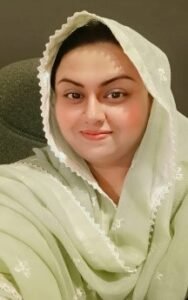
Samreen Bukhari
PRO, Lahore Arts Council Alhamra
LAHORE — There is a specific rhythm to Lahore, a chaotic, thrumming heartbeat that defines the existence of this ancient city. It is a city of noise, of commerce, of fog, and of glorious history. But for three days in late November 2025, that rhythm shifted. On the iconic Mall Road, inside the red brick walls of the Alhamra Arts Council, the noise of the world fell away, replaced by the rhythmic sound of the Qawwali, the hypnotic whirl of the Dervish, and the hushed silence of thirty thousand souls seeking a connection to something higher than themselves.
The Alhamra Sufi Festival 2025 was not merely a scheduled event on a cultural calendar; it was a phenomenon. In a time when public spaces are often contested or commercialized, Alhamra reclaimed its identity as Pakistan’s undisputed cultural sanctuary. Over seventy-two immersive hours, the festival did more than entertain; it provided a tactile, living proof of why UNESCO bestowed upon Lahore the prestigious title of “City of Literature”.
The Architecture of a Miracle
To truly appreciate the magnitude of this achievement, one must recognize the logistical masterpiece it represents. In the realm of public administration, where major international festivals of this caliber typically necessitate months of meticulous deliberation and comprehensive planning to ensure excellence, this event stands as a distinguished exception. It was a triumph of dynamic leadership and administrative synergy, conceived and executed with extraordinary precision in mere days.
This feat demonstrates that the Lahore Arts Council possesses the rare capacity to mobilize resources with breathtaking speed, turning a profound cultural vision into reality without compromising on the dignity or grandeur of the state.”
This cultural renaissance was ignited by the inspiring leadership of Chief Minister of Punjab, Maryam Nawaz, whose enlightened vision emphasizes the development of a creative economy and the preservation of heritage as pillars of modern identity. Her strategic directive for peace and inclusivity was translated into a vibrant reality through the dynamic policy alignment of Minister for Information and Culture, Azma Zahid Bokhari.
This high-level patronage was seamlessly operationalized under the steadfast and dignified oversight of the Secretary of Information and Culture, Syed Tahir Raza Hamdani, ensuring institutional precision. Grounded in this hierarchy of excellence, Executive Director Alhamra Mahboob Alam demonstrated a capacity for ‘vision into reality’ that transformed administrative will into a masterpiece of execution. Together, they did not just organize a festival; they constructed a temporary utopia where the spiritual heritage of Punjab could breathe freely.
A Pilgrimage of Thirty Thousand
The numbers tell a story that goes beyond mere footfall. Over 30,000 visitors poured through the gates of Alhamra between November 28 and 30. They filled the halls, spilled over into the lawns, crowded the corridors, and stood in the aisles. But who were they?
The lazy assumption would be that a “Sufi Festival” attracts only the older generation, the traditionalists clinging to the past. The reality, as evidenced on the ground, was startlingly different. The crowd was overwhelmingly young, with nearly half of the attendees between 25 and 35. University students, young professionals, and digital natives put down their phones to listen to the saints’ ancient wisdom. With a gender split of 55% men and 45% women, the festival became a rare space of genuine social inclusion, where the city’s socioeconomic divides dissolved under the unifying canopy of Sufi thought.
The Visual and the Verbal: A Journey Through the Senses
The festival opened not with a shout, but with a whisper of ink on paper. The exhibition “Whirling Lines of Sufi Wisdom” at the Ustad Allah Bakhsh Art Gallery sets the spiritual tone. Inaugurated by Secretary Syed Tahir Raza Hamdani, it featured 100 masterpieces by 65 artists, exploring the visual language of mysticism. Here, calligraphy was not just text; it was a map of the soul, resonating with a silence that prepared the visitor for what was to come.
But it was the spoken word that truly anchored the festival’s intellectual weight. In a brilliant curatorial move by Executive Director Mahboob Alam, the festival introduced Tehtul Lafz—the art of recitation. Imran Jafri took the stage daily. His voice, stripped of musical accompaniment, allowed the raw power of Sufi poetry to strike the audience with the force of revelation. It was a reminder that in the Sufi tradition, the word (Kalam) is the primary vessel of truth.
The Intellectual Pulse of the City of Literature
Lahore’s UNESCO status is not a relic; it is a responsibility, one that Alhamra shouldered with grace. The festival’s panel discussions were not dry academic exercises but urgent dialogues on the state of the modern human condition.
When Qasim Ali Shah took the stage to speak on “Iqbal ka Payam” (The Message of Iqbal), Hall 2 was packed to the rafters. He was not just lecturing; he was channeling the poet-philosopher’s call for selfhood (Khudi) to a generation hungry for direction.
The discourse deepened with panels featuring heavyweights like Dr. Sughra Sadaf, Dr. Moin Nizami, and Sahibzada Kashif Mehmood. They debated the relevance of Wasif Ali Wasif, the transmission of identity through poetry, and the role of Sufism in fostering social cohesion. In a session moderated by Dr. Fatima Fayyaz, the conversation turned to how Sufi compassion can heal the fractures of a polarized society. This was the “City of Literature” in action, not a museum of dead poets, but a living forum where the wisdom of the past was being weaponized against the anxieties of the present.
An Evening of Spiritual Devotion
As the sun set over The Mall, the atmosphere at Alhamra shifted from the cerebral to the celestial. The nights belonged to the Qawwals and the Dervishes.
The stage production “Maqsood e Kul Main Hoon,” a collaboration with the International Iqbal Society, brought the mystical philosophy of Allama Iqbal to life through theatre, captivating a packed Hall 1. It was a reminder that Sufism is inherently dramatic; it is a struggle of the soul enacted on the stage of the world.
Then came the Raqs-e-Dervish. The Versatile Group’s performance was a study in motion and stillness. As the dervishes whirled, their robes flaring like opening flowers, the audience was transported. It was a visual representation of the cosmos, planets orbiting a star, the soul orbiting the Divine.
But the crescendo, the moment that will be etched in the memory of Lahore for years to come, was the Grand Qawwali Finale by Sher Miandad. To say the venue was full would be an understatement. The music spilled out of the halls and echoed across the lawns and galleries. Thousands sat on the grass, stood on staircases, and leaned over balconies. When the Qawwal raised his voice in praise of the Divine, 30,000 people became a single organism, united in rhythm and rapture. It was a scene reminiscent of the great Urs gatherings of the shrines, transplanted into the heart of the modern city.
The Revival of the Creative Economy
Beyond the spiritual high, the festival grounded itself in the economic realities of the Punjab Culture Policy. It proved that culture is a viable economy. The book fair, featuring discounts from partners such as Bazm-e-Iqbal, the National Book Foundation, and Sang-e-Meel, saw strong sales. Literature was not just being discussed; it was being consumed.
Craft stalls, food vendors, and small-scale artisans found a dignified platform to generate income. From the technicians managing the complex sound systems to the hospitality staff ensuring the comfort of guests, the festival was a micro-economy in itself, fulfilling the UNESCO indicators for cultural infrastructure and development.
A Model of Governance
Perhaps the most unsung hero of the festival was the administration itself. Managing a crowd of this magnitude in a dense urban center is a logistical nightmare. Yet, the Alhamra team, working with the district administration, ensured a flawless experience.
There were no stampedes, no security lapses, and no mismanagement. The “overflow management”, using large LED screens in the gardens for those who couldn’t fit in the halls, turned the entire complex into an open-air amphitheater. It was a demonstration of “soft power” governance: efficient, invisible, and effective.
The Verdict: A Cultural Necessity
As the final notes faded on November 30, the Alhamra Sufi Festival 2025 left behind a question: Why isn’t this happening every year?
The public response was unequivocal. The engagement on digital platforms surged into the millions. The “talk of the town” was not politics or cricket, but poetry and spirituality. The festival did not just meet expectations; it shattered them, surpassing other popular literary events in the city in terms of emotional resonance and public enthusiasm.
In a world that is increasingly fractured, the Alhamra Sufi Festival offered a blueprint for unity. It showed that the heritage of Punjab is not a static thing to be preserved in glass cases, but a dynamic, living force that can engage the youth and heal the community.
Alhamra has long been called the cultural heart of Lahore. With this festival, it proved that the heart is beating stronger than ever. The festival was a resounding affirmation that Lahore remains the custodian of the subcontinent’s spiritual legacy. It is no longer a suggestion but a necessity: this festival must become an annual pilgrimage for the city. For three days, Alhamra was not just a red-brick building; it was a vessel of light. And Lahore, the City of Literature, shone brighter than it has in years.
Read more articles and expert opinions here: https://thepublicpurview.com/category/blog/
For more stories and insights, visit The Green Post
 Today's E-Paper