
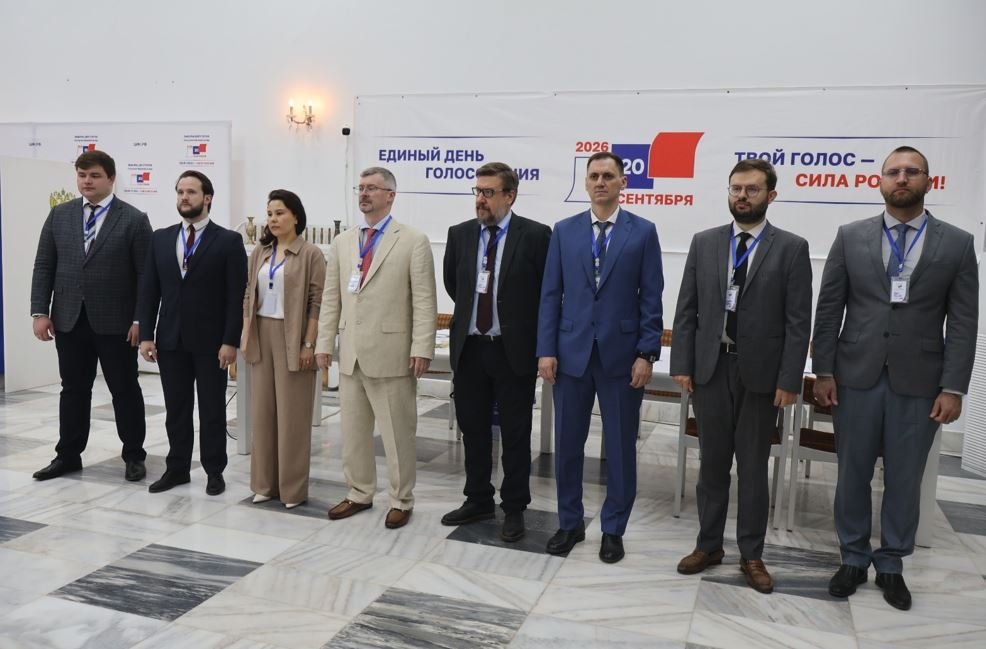
ISLAMABAD, Monday, September 21, 2026: A total of 130 Russian citizens cast their ballots in Russia’s 2026 State Duma elections at a polling station established at the Russian Embassy in Islamabad, the embassy said.
The polling station remained open on September 20 to facilitate Russian nationals living in or temporarily staying in Pakistan. Voters included officials of the Russian Embassy and Trade Mission, their family members and other Russian citizens present in the country.
Two observers appointed by the Civic Chamber of the Russian Federation monitored the voting process. According to the embassy, the observers reported that polling proceeded smoothly and in accordance with the prescribed procedures.
Russian Ambassador to Pakistan Albert P. Khorev, who chaired the Precinct Election Commission, said additional arrangements were made to facilitate voters because of traffic restrictions in Islamabad.

He said the embassy coordinated with Pakistani authorities to inform Russian citizens about voting arrangements and provided transportation to help eligible voters in Islamabad and surrounding areas reach the polling station.
Observer Olga Starkova said the election commission at the Russian Embassy worked efficiently and that she had identified no violations of the established voting procedures.
Another observer, Natalia Zhilina, said polling remained calm and the required procedures were followed, while noting what she described as a responsible approach by organisers and voters.
The Russian Embassy thanked citizens who participated in the election and exercised their right to vote.

The State Duma is the lower house of Russia’s parliament and has 450 seats. Half are filled through federal party lists and the remaining 225 through single-member constituencies.
The September 20 parliamentary vote was Russia’s first State Duma election since 2021. Preliminary results released by Russia’s Central Election Commission showed the ruling United Russia party leading the party-list vote as counting continued.
Russian citizens also voted at polling locations outside the country, including diplomatic missions established for eligible voters living or temporarily staying abroad.