
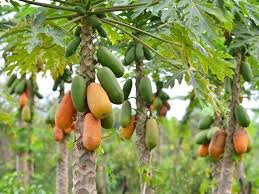
Papaya cultivation requires careful consideration of environmental conditions, soil type, and site selection to ensure healthy growth and maximum fruit yield. Since papaya is a sensitive crop, farmers and growers need to evaluate several factors before planting.
For successful papaya cultivation, soil characteristics play a vital role. The type of soil should be fertile and well-drained, as papaya roots are prone to rot in standing water. Sandy loam soil with good organic content is ideal. Water absorption and drainage capacity must be balanced to avoid both waterlogging and drought stress.
Sunlight is another crucial factor. Papaya trees require full exposure to sunshine throughout the day, as limited light can reduce fruiting. At the same time, the duration of sunshine and day length should be monitored for optimum growth. Additionally, risks such as fog and hail must be minimized, since papaya plants are highly sensitive to both.
Temperature also defines the success of papaya farming. The ideal range lies between 68°F and 90°F (20°C to 32°C). Consistent temperatures outside this range can affect growth and fruit quality. Wind circulation and direction should also be considered, as strong winds may damage the fragile stems and leaves of papaya plants.
When selecting a planting site, the warmest portion of land with proper drainage should be chosen. Papaya trees should not be planted near buildings or large structures, as these can block airflow and sunlight.
In summary, papaya cultivation thrives in warm and subtropical climates with fertile, well-drained soil, abundant sunlight, and minimal fog or hail risk. By choosing the right site and maintaining proper environmental conditions, farmers can achieve a high-quality papaya yield.