Richest countries rankings for 2025 highlight rising incomes, expanding financial hubs and strategic economic reforms that are reshaping global wealth, as new international estimates reveal which nations now lead the world in per capita prosperity. The latest projections, based on purchasing power parity and population-adjusted income levels, show that small but highly diversified economies continue to dominate the list, often outperforming far larger nations.
How the richest countries are ranked
National wealth is often measured through Gross Domestic Product per capita, which divides total economic output by the resident population. To improve accuracy, economists adjust this figure for inflation and local cost of living, a method known as Purchasing Power Parity (PPP).
These projections are compiled by global financial institutions including the International Monetary Fund, offering a clearer picture of individual prosperity rather than national economic size alone.
Singapore leads the richest countries in 2025
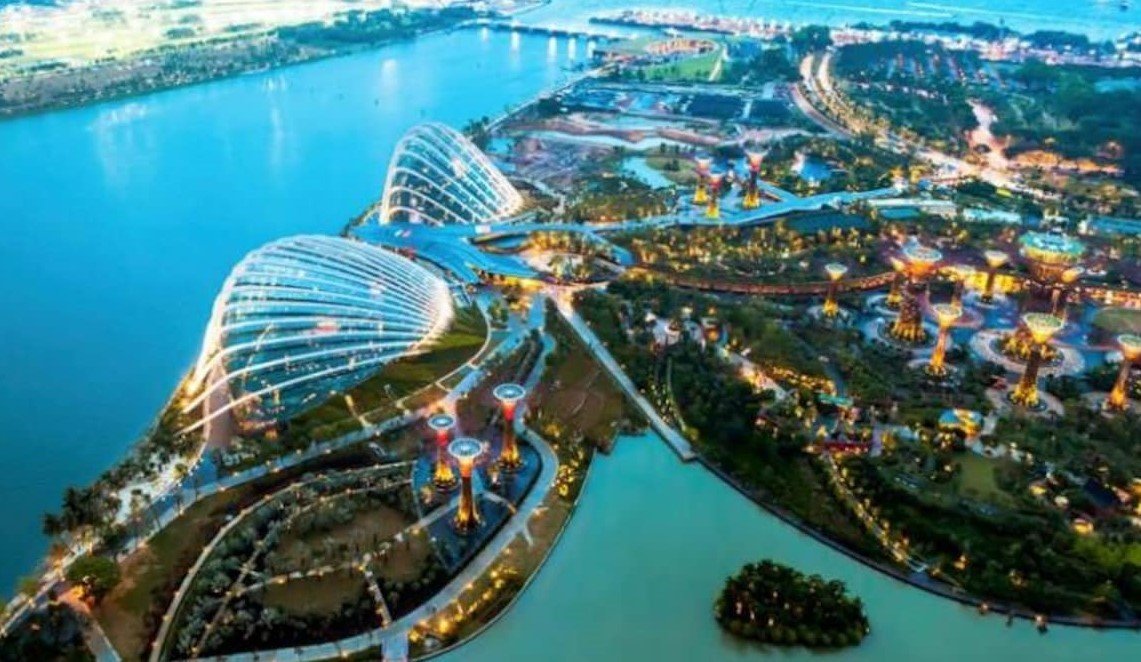
Singapore tops the global ranking with an estimated GDP-PPP per capita of $156,760 and steady annual growth of about 2%. The city-state’s wealth is driven by its role as a global shipping hub, strong financial services industry, and highly efficient governance.
Its success rests on trade connectivity, advanced manufacturing, digital innovation, and investor-friendly economic policies.
Luxembourg’s financial dominance keeps it near the top
Luxembourg follows closely with a GDP-PPP per capita near $152,920. The country’s economy is built around international banking, fund management, and steel production. Its position as a base for thousands of investment funds continues to draw capital from across Europe and beyond.
Macao and Ireland show contrasting wealth models
Macao records per capita income of roughly $134,040, powered largely by tourism and gaming revenue. Casino operations generate income levels that surpass many traditional industrial economies.
Ireland matches Macao on income levels through technology, pharmaceuticals and multinational investment attracted by competitive corporate tax policies and a highly skilled workforce.
Energy wealth drives Qatar and Norway
Qatar secures a top-five position with a GDP-PPP per capita exceeding $121,000, supported by vast natural gas and energy exports. State investment and infrastructure expansion continue to reshape its economy.
Norway’s prosperity, at nearly $108,000 per capita, reflects disciplined oil revenue management through its sovereign wealth fund, combined with modern manufacturing, shipping and renewable energy leadership.
Switzerland and Brunei reflect stability and state support
Switzerland maintains its high-income status through banking, pharmaceuticals and precision engineering, even as economic growth remains moderate.
Brunei’s economy, built around oil and gas exports, delivers strong per capita income while funding broad social welfare and public services for its citizens.
Guyana records fastest growth among richest countries
Guyana posts the fastest growth rate on the list at over 10%, after offshore oil discoveries transformed its economic outlook. Energy projects led by international firms are rapidly lifting national income levels.
United States remains global giant despite lower per capita rank
While ranking tenth among richest countries by per capita income at about $89,110, the United States remains the world’s largest economy by total output. Its wealth stems from technology, finance, manufacturing, agriculture and entertainment industries.
Wealth concentration favors strategy over size
The 2025 ranking reinforces a familiar pattern: the richest countries are often compact nations with smart financial policies, natural resource advantages, or strong innovation-driven industries. Economic imagination, governance and diversification now matter more than geographic scale.
Read related news here: https://thepublicpurview.com/category/blog/
For more stories and insights, visit The Green Post